


The 2026 Chemical Footprint Project Report celebrates a decade of progress, highlighting companies’ elimination of 680 million pounds of hazardous chemicals.
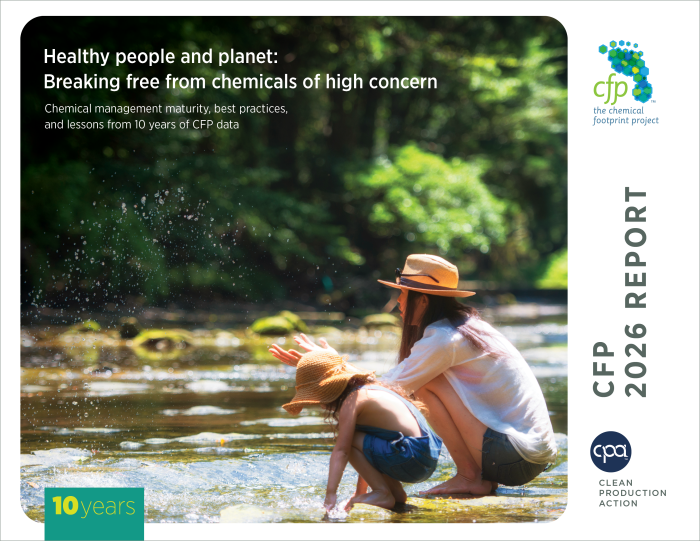
Over the past decade, companies participating in the Chemical Footprint Project cut their use of hazardous chemicals by 680 million pounds — roughly the weight of 1,156 Airbus A380 jumbo jets.
That’s one of the findings in our 2026 Chemical Footprint Project Report, released today. Now in its 10th year, the project scores companies on how they manage, measure, reduce, and disclose their use of chemicals of concern, including PFAS, the so-called “forever chemicals.”
Read the report on the Chemical Footprint Project website.
Report Highlights
- Nine companies earned Frontrunner status, the report’s top distinction: Case Medical, Clorox, Ecolab, GOJO (maker of Purell), Grove Collaborative, MillerKnoll, Naturepedic Organic Mattresses, SW Sustainability Solutions, and Walmart.
- The project is backed by investors with more than $4 trillion in assets under management and purchasers with more than $1 trillion in buying power.
- Ten years of survey data show a consistent pattern of chemical management maturity: companies identify which chemicals to restrict, build chemical management systems and strategies, reduce their use of chemicals of concern while selecting safer alternatives, then publicly disclose their progress.
Why It Matters
As our Executive Director, Dr. Derreck Kayongo, said, “Every ounce of hazardous chemicals that a company designs out of its products and supply chain is an ounce that never reaches a consumer or worker, or ends up in our soil or water.”
The Chemical Footprint Project is a program of Clean Production Action. Mark Rossi, PhD, and I wrote this year’s report.
Spread the News and Learn More
- Read the full report on the Chemical Footprint Project website.
- Follow us on LinkedIn and look for upcoming news about our Chemical Footprint Project webinar.
- Share this with a company that you think should participate in the next Chemical Footprint Project survey.
- Donate to support future reports and Clean Production Action’s work.
Thank you for your support.
Ellen Goldberg, MBA
Deputy Director, Clean Production Action